
Celebrating 20 Years The Green Living Journal has been publishing practical information for friends of the environment in Vermont for 20 years and our Portland-Vancouver edition has been up and running for over 2 years now. As part of our celebration of these milestones we felt we needed to publish the stories of some of the other local businesses that are also 20 years old or more. We look forward to the next 20 years and all the exciting changes that are coming. In this issue we asked David Stelzer of Azure Standard to tell us their story. Azure Standard Five generations of our family have been farming in the…
-
-
Fiber Cells + Pokeberries = Solar Power
Here’s an exciting article by Alicia W. Roberts, Wake Forest University and posted on RenewableEnergyWorld.com website. Seems Wake Forest University holds the first patent for fiber-based photovoltaic, or solar cells, granted by the European Patent Office in November. A spinoff company called FiberCell Inc. has received the license to develop manufacturing methods for the new solar cell. And now the scientists at the University’s Center for Nanotechnology and Molecular Materials have used the red dye made from pokeberries to coat their efficient and inexpensive fiber-based solar cells. The dye acts as an absorber, helping the cell’s tiny fibers trap more sunlight to convert into power. These low cost fiber cells…
-
SoupCycle Delivers Organic Soup-Based Meals Made from Locally Sourced Foods
A several years ago, a couple of college students made a business plan to make and sell locavore soup and deliver it by bicycle. The students came to Portland and set up their business, SoupCycle. Jed Lazar and Shauna Lambert are the creative cooks and bicycle peddlers behind the food service business. They source local produce whenever possible and actively pursue environmentally sustainable, socially responsible business practices. They do have help with deliveries from fellow SoupCyclers Jen and Matt and they’re avid bicycle advocates twittering support for bike events and get-togethers. Soups and soup meals are available by subscription. Ordering online is easy and both the soup…
-
Portland’s Coal Problem
According to Mayor Sam Adams,Portland receives 68 percent of its power from non-renewable fossil fuels and over 44 percent is produced by coal. A great deal of that coal-fired power generation originates in the Rocky Mountains. Oregon’s only coal-fired electric power plants is located in Boardman, Oregon. It is the state’s largest stationary source of carbon dioxide, sulfur dioxide, nitrogen oxide and other pollutants including mercury. PGE owns 65 percent of the Boardman coal-fired power plant and is seeking to submit an alternative operating plant that would phase out the facility or switch to non-coal fuel by 2020. In January, Adams announced his support of PGE’s work to rethink the…
-
Earthen Hand
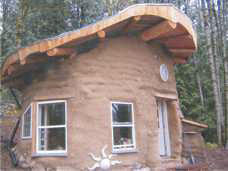
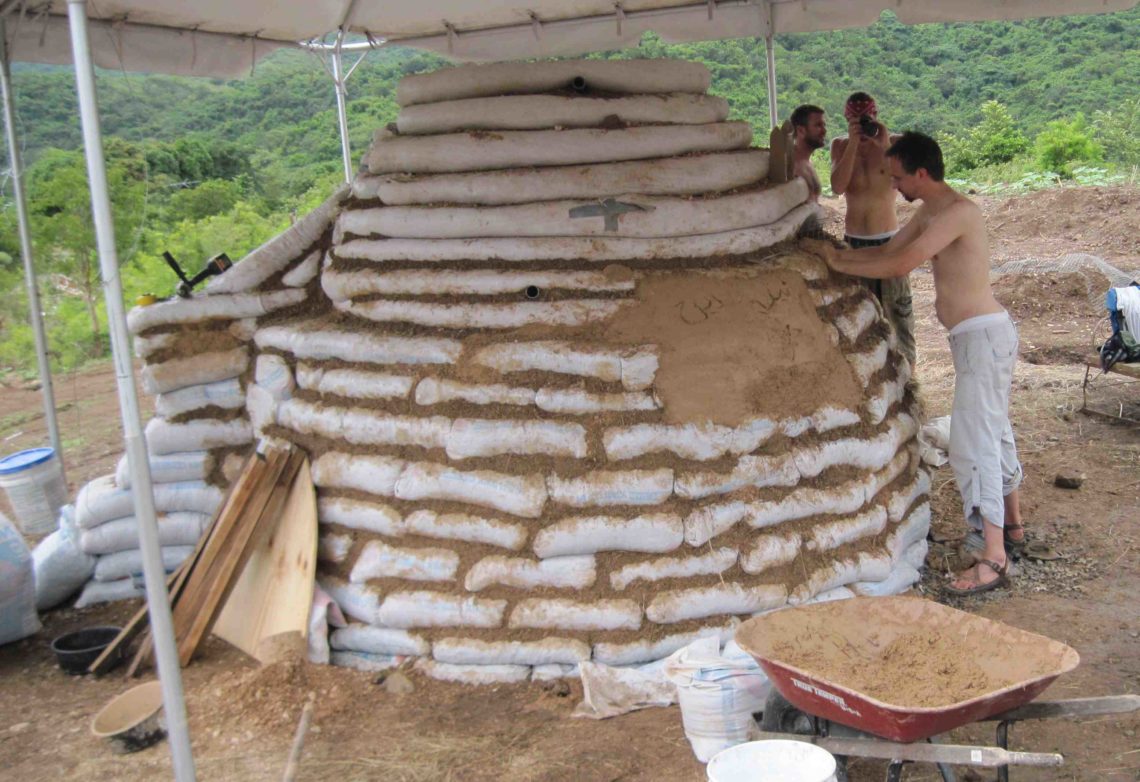
The Local Application of Traditional Building Techniques According to Scott Howard, founder of Earthen Hand Natural Building, the materials and methods in natural building construction are highly sustainable because they are readily available and easy to use. Structures built of earthen materials are more likely to last for many centuries in contrast to a few decades for most contemporary stick-framed buildings. Wood-framing remains the most popular way to build homes in the Pacific Northwest where plentiful forests were once thought of as monstrosities to be cut into submission. The popularity of wood construction over time is a contributor to deforestation worldwide. Some estimates state that we have used 90% of…
-
Earthen Hand – Building Sustainably by Teaching Construction Techniques
Artist Scott Howard is a community resource whose sculptural architecture is often finished with earthen paints and plasters.
-
Portland Garden Cottages – Intimate Spaces from Recycled Building Materials
There’s an ongoing debate in my house over what constitutes a “too small” dwelling, so I’m always on the prowl to bolster my position that we can live well in small spaces. Evidence: The Portland Garden Cottages designed and built by Jeffrey Gantert and Brad Bloom. Gantert and Bloom built two small, (364 square-feet) cottages from mostly used building materials. The cottages took advantage of an empty lot in the Mississippi Historic District of the upper Albina neighborhood of Portland. They are designed to fith with the history and character of the neighboring structures, a mixture of ordinary working-class homes and ornate Victorian-style architecture. From the outside,…
-
Power to the People
Community effort in Southeast Portland brings solar within reach for many. PORTLAND, Ore. — September 16, 2009 was the deadline for Portland homeowners to become part of the very first Solarize Portland project — a grassroots effort that’s making it easier to go solar for less through the power of community. What began as the idea of one homeowner in Southeast Portland, has now grown to include 335 neighbors. The number is well over the original project goal of 50 participants. Led by Southeast Uplift Neighborhood Coalition and Energy Trust of Oregon, the group is going through the process together — from learning how solar works, to installing systems on…
-
Pixels vs. Paper
Our publication The Green Living Journal is available both on line and in printed form at 350 locations throughout the Portland-Vancouver metro area. The question of which of the two editions has the least impact on our environment is of constant concern to us, but the answer is rather elusive and often determined by who does the research. What makes for interesting reading are some of the bullets that the different sources put forth in order to support their particular position. From International Paper’s latest newsletter we learned that: “On average it takes 500 kilowatt-hours of electricity to produce 440 lbs. of paper, the typical amount of paper each of…
-
Bottled Water: A Shrinking Market
Some cities have gone as far as outlawing the sale of bottled water. Some states charge a refund deposit on water bottles in an effort to corral the burgeoning number of discarded one-use water bottles. Here are some facts from TwilightEarth.com: Bottled water costs up to 4,000 times more than tap water. Bottled water is essentially tap water Bottled water does not fall under FDA guidelines, and often has more mercury and other pollutants in it than public utility water. 80% of water bottles end up in landfills, streams and the environment. It takes 5 bottles of water to create the plastic for 1 water bottle. The good news is…