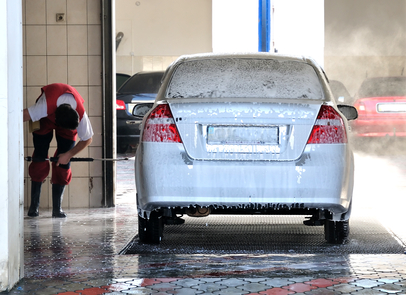
In the last decade, Americans have been encouraged to take a second look at their recycling habits, what eco-friendly products they buy and how they are supporting environmentally friendly companies. Did you know cleaning your car in a commercial car wash is considered far more eco-friendly than washing it in your driveway? Located in the heart of Portland, EcoCarwash is one of many places you can take your car to make it sparkle like new, while doing something good for the environment at the same time. Here are a few reasons why taking your car to any car wash is a good call to make. Saving Water While Washing When…
-
-
Portland’s Urban Food Zoning Code
In June of 2012, Portland City Council made a significant step toward increasing access to healthful, affordable food for all Portlanders by adopting the Urban Food Zoning Code Update. The new regulations address community gardens, farmers markets and market gardens, as well as alternative food distribution methods such as community sponsored agriculture (CSA) and food buying clubs. Because even a small cost can be a barrier for some, this proposal has very little in the way of permit fees, land use reviews and the like. Almost all activities will be allowed outright if standards are met. This action puts Portlanders in position to take advantage of the ideas proposed by…
-
Turning a Brown Field Green
The land at NE 82nd and Siskiyou has a checkered past. It is a former landfill, capped in 1982. Many of those living and working in the Madison South and Roseway neighborhoods have seen this area attract unwanted activities and attention. The site has remained derelict, despite its tremendous potential for the neighborhood, city and region. The Dharma Rain Zen Center, a Soto Zen Buddhist temple, sees great potential in the Siskiyou property for a new campus that is sustainable, beautiful and benefits their congregation and the neighborhood alike. They plan to create an attractive, compatible, low-impact campus that serves the community. They will: Restore the 14-acre parcel to a…
-
Food Waste is Fodder for Fashion in the Bio-trimmings Project
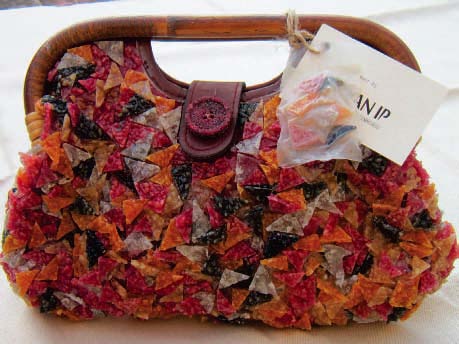
London-based Hoyan Ip, a 2012 MA Fashion graduate, observed that food waste could help offset fashion industry waste. So, she set about using discarded food to make buttons, buckles, and other garment trims. Ip says, “Fashion represents change. Bio-trimmings are unique products that act as an object to educate and make good changes towards both sustainable fashion and ethical living for the future.”
-
Book Review: The Nature Principle
People Can Benefit By Reconnecting with Nature Algonquin Books of Chapel Hill, 2012 Reviewed by Roger Lohr The Nature Principle: Human Restoration the End of Nature-Deficit Disorder is by Richard Louv, who wrote Last Child in the Woods, and has toured around the country recommending that we help kids discover or reconnect with nature. This can be called a movement and now Louv is extending his message to adults. His premise is supported by research and anecdotes that the connection to the natural world is fundamental to human health, well-being, spirit, and survival. Additionally, outdoor experiences may enhance the ability for us to learn and think, to expand our senses,…
-
Astute ‘Adoornment’
Cabinet Doors Become Artist’s Canvas Bright colors, a love of nature, a sense of delight, and a practiced hand all contribute to the look and feel of Elizabeth See’s oil paintings. At first glance, her work appears to be rendered on traditional materials. Closer examination will reveal that she uses discarded cabinet doors and cut-offs from woodworking production as the canvas for her art. The BZ Corner, WA artist takes repurposing seriously and is constantly on the hunt for scrap wood and disused cabinetry. It is as natural for her to befriend nature by keeping usable materials from the landfill as it is for her to sit quietly studying the…
-
Should You Drink What’s In Your Tap?
Water treatment has come a long way since we washed our clothes, bodies and livestock in the same bodies of water we used to dispose of our bedpans. In fact, diseases like polio, hepatitis A, and other horrific ailments have been all but eradicated since we’ve learned proper water treatment en masse. Although now we’re facing a whole new set of health problems as new issues are being raised about the side effects of current chemical additives. Is Portland Water Safe? Portland’s wastewater collection and treatment system works around the clock to monitor the millions of gallons of dirty water that the city and area residents produce.. This process begins…
-
The Value of Wastewater Recycling
Sorting your water bottles and soda cans into recyclable and non-recyclable isn’t enough to live completely green and cut down on waste. One of the most important recyclables is water. According to the Water Information Program, daily water consumption of an average American is about 176 gallons per day and the United States uses a staggering 3.9 trillion gallons of water per month. Global wastewater programs are working to create efficient ways cities and towns can repurpose water. You can do your part by recycling lightly-used household water to reduce the amount you use every day. Reusing Grey Water At Home Recycling companies, such as recycling services from republicservices.com, are developing…
-
An Ecology Based Education
Interview with David W. Orr What is the purpose of education? What exactly are we trying to achieve by sending kids to school for twelve years? Dr. David Orr, Distinguished Professor of Environmental Studies at Oberlin College, sees a direct connection between how we teach children and the disastrous impacts of our dependence on fossil fuels. A pioneer in the ecological literacy movement, he believes that all education should be ecologically based, from the design of the campus to the curriculum itself. “All education is environmental education,” says Orr. “Students either learn that they are a part of or apart from the natural world.” He points out that some of…
-
The Mysteries of Recycling:
Part I Understanding the Problem What’s so mysterious about recycling? We dutifully put our waste paper, cardboard, empty cans, plastic containers, and glass jars into our recycle containers and then set them at the curb. Some of the more conscientious of us even give some thought to the rules for what can be recycled and how it should be sorted. Others don’t. Then we all go about our daily lives thinking that we are building a more sustainable world by turning our waste into someone else’s treasure. Seems simple enough. Ah, if only that were true. Historical Perspective Recycling, as we think of it today, didn’t come into existence until…