
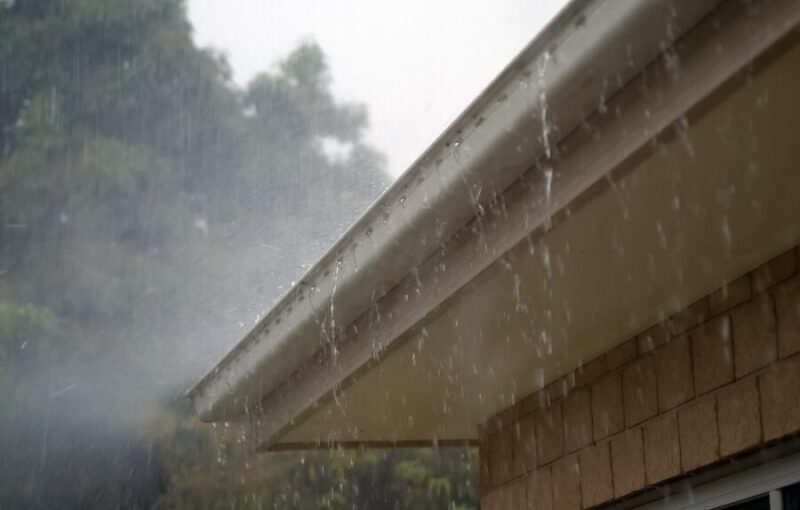
Collecting rainwater is not illegal or a federal crime. Rainwater collection laws vary because of state water-rights doctrines, not federal environmental rules. Understanding prior appropriation and riparian rights makes the patchwork of state laws much easier to navigate.
Who Owns the Rain?
Water rights in the U.S. developed differently across regions, depending on climate and settlement patterns. These doctrines shape how states regulate rainwater collection:
- Eastern states follow riparian rights: If your property borders a water source, such as a river or lake, you can use that water. You can generally collect rain that falls on your land because water is abundant in these regions.
- Western states follow prior appropriation water rights: Water belongs to whoever claimed it first, regardless of property boundaries. The principle of “first in time, first in right” means giving senior water users priority over newer claims.
- Scarcity drives the rules: States with arid climates protect every drop. Because only 3% of Earth’s water is freshwater, with just 0.5% available for human consumption, downstream users depend on consistent water flow.
States With Strict Limits
Prior appropriation states tend to impose tight restrictions. For example, Colorado caps rainwater collection at two barrels totaling 110 gallons for outdoor use only.
The state’s complicated water rights system means that rainwater running off your roof is already claimed by someone downstream. Rainwater collection volume limits exist to prevent upstream property owners from intercepting water that senior rights holders legally own.
Other Western states, like Nevada and Utah, have loosened restrictions, but Colorado’s allocations remain complex and heavily litigated.
States Requiring Permits, Registration and Local Approval
Several states allow rainwater collection while regulating system size, water-right implications or indoor use. Utah, for example, requires residents to register larger rainwater harvesting systems with the Utah Division of Water Rights. However, people can collect rainwater without registering if they use no more than two covered containers and each container holds 100 gallons or less.
Other states take a more conditional approach. Washington allows rooftop rainwater collection without a water-right permit when the water is used on the property where it is collected and comes from an existing structure, but potable or in-home use may require county, building or health approval.
Oregon is another example of how specific the rules can get. The state exempts rainwater collected from an artificial impervious surface, such as a building roof, from the surface-water permitting process.
The key factor is usually how much water you store and whether you plan to use it outdoors for gardens and lawns or indoors for plumbing. Indoor use typically raises separate health, building-code and treatment questions. These rainwater use restrictions protect both water rights and public health.
States and Cities That Encourage Rainwater Collection
Many state or local governments encourage rainwater collection through guidance, rebates or conservation programs.
- Florida: Miami-Dade County offers eligible residents a rain barrel rebate after they complete a workshop and purchase and install a qualified barrel.
- New Mexico: Albuquerque Bernalillo County Water Utility Authority offers rain barrel and cistern rebates based on total storage capacity. Santa Fe offers rebates for rainwater harvesting for qualifying rain barrels and cisterns, installed by eligible water customers.
- Arkansas: Collecting rainwater in a barrel for gardening or other uses is unrestricted in the state, but broader water diversion rules may apply in other contexts.
How the Clean Water Act Impacts Runoff
State restrictions focus on quantity and property rights, not environmental concerns. The Clean Water Act (CWA) establishes strict standards for water quality and runoff management to prevent contamination.
The Environmental Protection Agency actively promotes rain barrels because capturing roof runoff reduces the amount of water entering stormwater systems. When rainwater flows across pavement and lawns, it picks up pollutants before entering storm drains. Rain barrels interrupt that cycle.
Commercial operations face different rules. The National Pollutant Discharge Elimination System is part of the CWA, and its stormwater program may require businesses to have a permit before discharging wastewater and stormwater. This protects ecosystems from potential pollutants in commercial runoff.
Local Rules and Neighborhood Guidelines
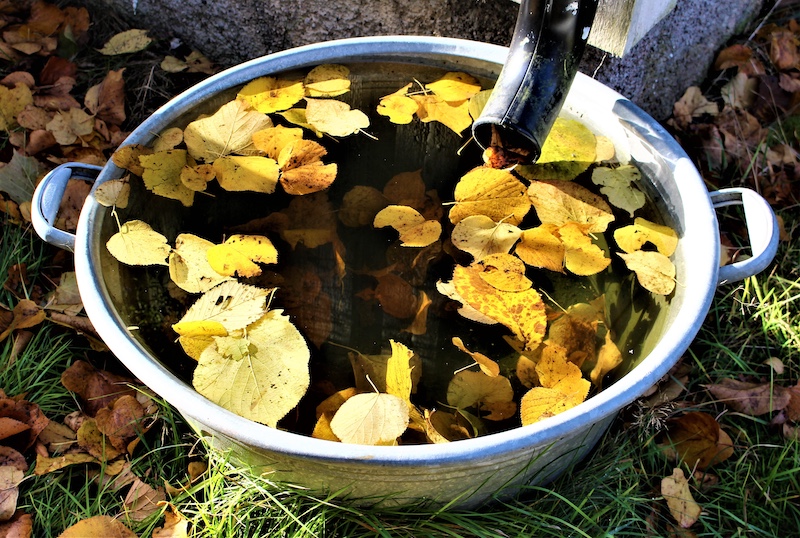
Even if your state allows collection, local ordinances and homeowners associations (HOAs) can add another layer of restrictions. Many HOAs regulate the visual impact of rain barrels because they prioritize neighborhood aesthetics. You might need to hide barrels from street view or paint them to match your house.
Some municipalities have similar requirements about barrel placement and appearance. Rainwater collection HOA restrictions can be strict, even in states with permissive laws.
If your neighborhood bans visible barrels, natural landscaping offers an alternative approach to water management. Riparian areas with native plants act as natural filters that remove pollutants from water as it moves through the watershed. This gives you another way to manage stormwater on your property while staying within local guidelines.
Considerations Before Buying a Rain Barrel
Think carefully before investing in a rainwater collection system.
- Check your state’s water rights laws: Verify whether your state follows riparian or prior appropriation water rights and what that means for collection.
- Confirm volume limits: Find out whether your state caps storage at specific gallon amounts, since some states have no restrictions.
- Identify approved uses: Determine any rainwater use restrictions, such as whether you can use collected water for outdoor irrigation only or indoor plumbing as well.
- Review local ordinances: Contact your city or county to ask about permits and placement requirements.
- Read HOA bylaws: Check for restrictions on barrel visibility and exterior modifications if you live in a planned community.
- Determine equipment needs: Find out whether you need a backflow preventer or filtration system for your intended use.
Making the Most of Every Drop
Rainwater collection laws seem daunting because they’re rooted in doctrines developed during westward expansion. However, a quick search of your state and local guidelines will tell you exactly what you can do. Most homeowners can legally collect rainwater with minimal restrictions. Start researching your area’s specific rules today, and you’ll be conserving water in no time.
Jack Shaw is the senior Outdoors writer for Modded, a men’s lifestyle publication. An avid outdoorsman and lover of nature, he’ll often find himself taking retreats out to explore his environment and encourages others to do the same in ways that are sustainable and beneficial to the environment.
Image by sandid and Lena Lindell