
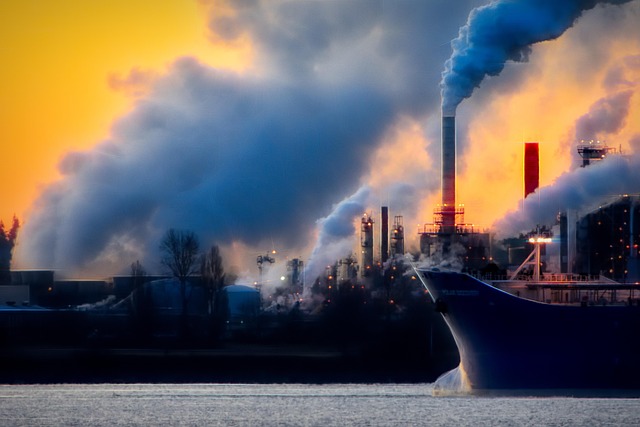
When people refer to greenhouse gas emissions, the most commonly considered are carbon dioxide, methane and nitrous oxide. While many others exist in small amounts, these three contribute most to climate change and global warming. With a worldwide trend toward sustainability, business and industry leaders are making concerted efforts to reduce these emissions. What sectors and industries contribute the heaviest of these worldwide?
The Energy Sector Contributes More Emissions Than Any Other
The energy sector produces far more greenhouse gas emissions than any other. With power, transportation and industry included, it is perhaps unsurprising that over three-quarters of globally produced emissions stem from this sector.
1. Power
Electricity and heat production contribute more to global emissions than other industries. Over the past 100 years, these have contributed over 16 billion metric tons of greenhouse gas emissions, the vast majority of which are carbon dioxide. Worldwide initiatives are in place to generate more renewable energy to alleviate reliance on traditional fossil fuels used in electricity production. Despite these, carbon dioxide emissions grew 1.6% in 2024, due mainly to a 4% increase in electricity demand worldwide.
Renewable energy generation reached record highs in 2024, but these totals failed to cover the excess demand due to warmer global temperatures, meaning coal usage rose 1.4% and gas 1.6%. Interestingly, while electrical power and heating contribute most to the energy sector emissions worldwide, transportation greenhouse gas emissions eclipse these in the United States’ economic sector. In 2022, the transportation industry contributed 28% of the total compared to power’s 25%.
2. Transport
In transportation, greenhouse gases come from fossil fuels burned in fuel for cars, trucks, trains, ships and airplanes. Almost all fuel used in transportation is petroleum-based — primarily gasoline and diesel — and results in direct greenhouse gas emissions. Electric vehicles are end users in the power industry but represent only a minor contributor to total electricity use despite a growing trend toward this transportation form.
Fossil fuel-produced gas and diesel will likely remain dominant in transportation for the foreseeable future. The latter is the primary player in commercial vehicle transportation, leading to increased carbon dioxide and nitrous oxide emissions. The U.S. Environmental Protection Agency plans to reduce greenhouse gas emissions from pickup trucks and vans by up to 25%, which should reduce the impact.
3. Industry
In industry, including manufacturing and construction, greenhouse gas emissions predominantly stem from on-site burning of fossil fuels for energy. Industry accounted for 12.7% of energy sector emissions, third to electricity and heating’s 29.7% and transportation’s 13.7% of the global energy totals at the end of 2021.
Due mainly to COVID-19’s impact, U.S. manufacturing emissions were substantially lower in 2021 than in 2002. Despite many companies applying environmentally friendly practices in their plants, the Congressional Budget Office projects total manufacturing emissions to increase by 17% between 2024 and 2050. It bases these projections on the growing outputs of emission-intensive industries during that period. Remember that chemical, metallurgical and mineral processing also produce greenhouse gas emissions in manufacturing, with these excluded from energy sector totals.
Although reports and estimates vary between sources, the United Nations Environment Programme considers the building and construction industry a significant contributor to greenhouse gas emissions, with around 21% of the global total. With a goal of net-zero emissions for new buildings by 2030 and existing ones by 2050, the organization believes that incorporating more stringent policies within the industry is necessary to enhance energy efficiency and address carbon dioxide emissions.
Other Sectors Contributing to Global Greenhouse Gas Emissions
While the energy sector contributes the heaviest greenhouse gas emissions globally, agriculture and waste also contribute, although to a lesser extent.
4. Agriculture
Most of the agricultural industry’s greenhouse gas emissions come from livestock. Ruminants like cattle and sheep regularly pass gas from both ends, but their burping emits most enteric methane, the largest source of livestock emissions. Manure management systems account for varying methane and nitrous oxide emission levels, with manure lagoons and other liquid storage systems emitting more greenhouse gases than other storage systems.
Fertilizer manufacturing plants produce carbon dioxide, while spreading fertilizers on crops emits nitrous oxide. Expanding grazing and crop lands by converting forests and grasslands causes carbon dioxide emissions from soils and biomass.
Rice is a staple food for half the world’s population, and its cultivation contributes about 10% of total agricultural emissions globally. Livestock and rice farming are the most significant contributors to global emissions through agriculture, and they contribute markedly to the sector’s status as the heaviest worldwide nonenergy-related greenhouse gas emitter.
5. Waste
The productive education of children on climate change creates altered mindsets. Most teaching stresses waste prevention. Although emissions of nitrous oxide and methane from landfills form only a single-digit percentage of the total global output, without education, things like plastic garbage could cause these figures to rise. Considering the low global percentage for waste emissions of under 5%, the 3.3% of total global greenhouse gas emissions allocated to plastics shows the necessity for greater education and control.
Working on Curbing Heavy Emissions
World organizations, governments, companies and individuals know that reducing greenhouse gas emissions is essential. Players are making concerted and constructive efforts across all industries to curb heavy emissions through stricter regulations, innovative sustainability ideas and operational proactivity. While the measures in place are slowly reaping benefits, there remains a long way to go, especially in the energy sector.
Jack Shaw is the senior Outdoors writer for Modded, a men’s lifestyle publication. An avid outdoorsman and lover of nature, he’ll often find himself taking retreats out to explore his environment and encourages others to do the same in ways that are sustainable and beneficial to the environment.
Image by Chris LeBoutillier





One Comment
Pingback: